01
Why Is My Water Heater Leaking?
tank corrosionshutoff valvewater damage
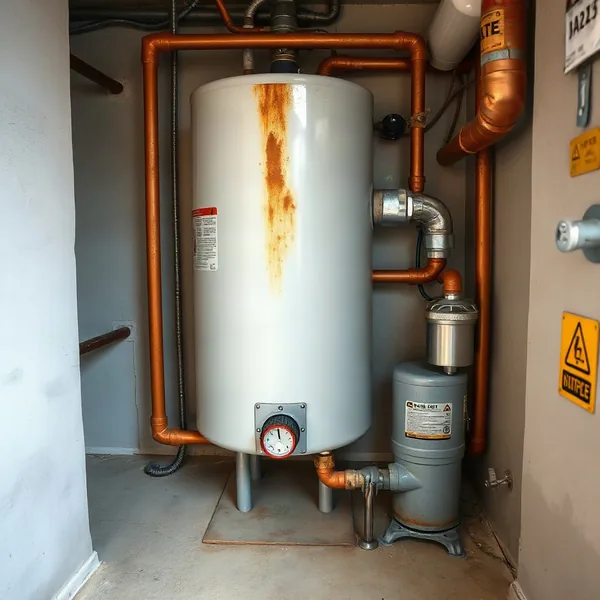
A water heater leaking almost always traces to one of four causes: internal tank corrosion, a failed shutoff valve, a faulty temperature-and-pressure relief valve, or loose inlet and outlet fittings.
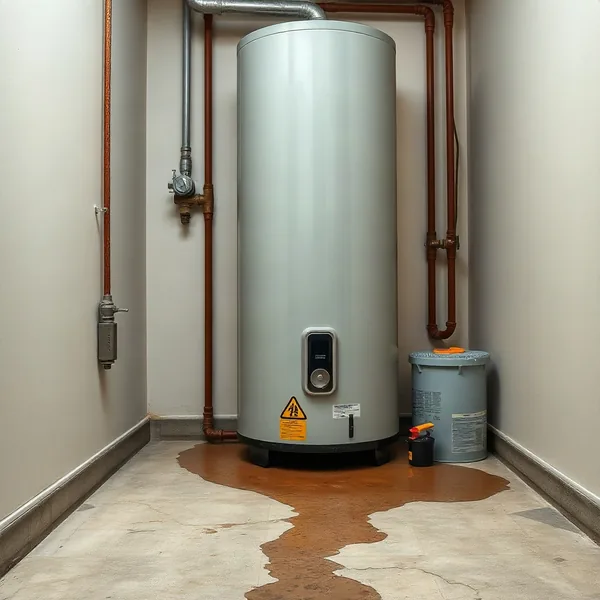
When your hot water tank leaks from the bottom, tank corrosion is usually the reason — the steel interior rusts through after years of exposure, especially in Torrance where hard municipal water depletes the anode rod faster than the rated lifespan suggests. Water leaking from the top of a hot water heater points toward fittings or the shutoff valve. Either way, act quickly: standing water causes water damage within hours, and a corroded tank rarely seals itself.
02
Can a Loose Pipe or Fitting Be the Real Source of the Leak?
flex connectorfitting sealcylinder tank
Yes — a water heater pipe leak is one of the most common calls technicians receive, and it's often the best-case scenario.
The flex connector joining the tank to the supply line can loosen after years of thermal expansion and contraction, leaving the fitting seal weeping a slow drip rather than the tank itself failing. Technicians check every cylinder tank joint before assuming the vessel itself is compromised, because misdiagnosing a fitting as a tank failure costs homeowners thousands of dollars unnecessarily.
03
Is a Small Drip Something to Worry About?
drain pandripping valveearly corrosion
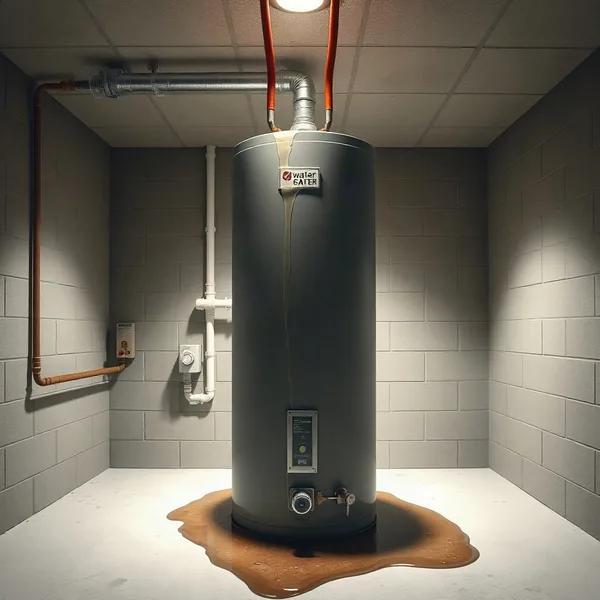
Hot water leaking from the base can saturate the drain pan, overflow onto the floor, and wick into subfloor framing before you notice it's more than a nuisance. A dripping valve — particularly the T&P discharge pipe — sometimes means system pressure is running too high rather than the valve itself being defective, and that pressure is stressing every joint in the tank. A slow drip at the tank shell almost always signals early corrosion beginning to work through the steel wall. The drain pan buys time but not much of it; water dripping from the water heater consistently is a call to make today, not next week.
04
Tank vs Tankless: Do They Leak the Same Way?
tankless heat exchangerboiler tankgas unit seal
Tankless water heaters and traditional tank units leak for different reasons.
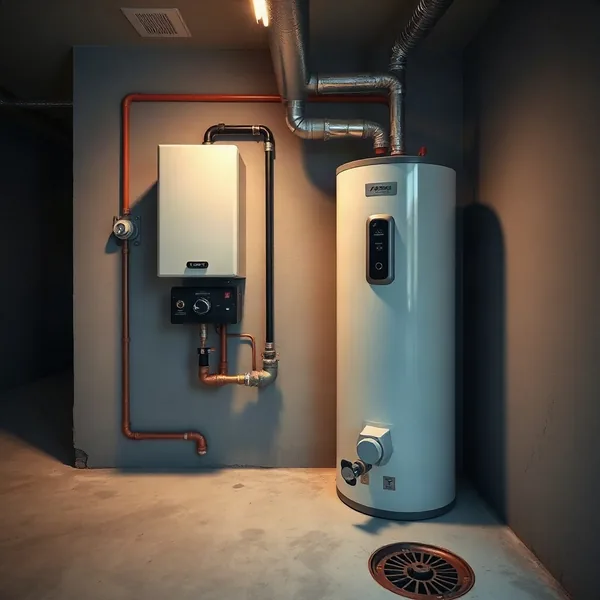
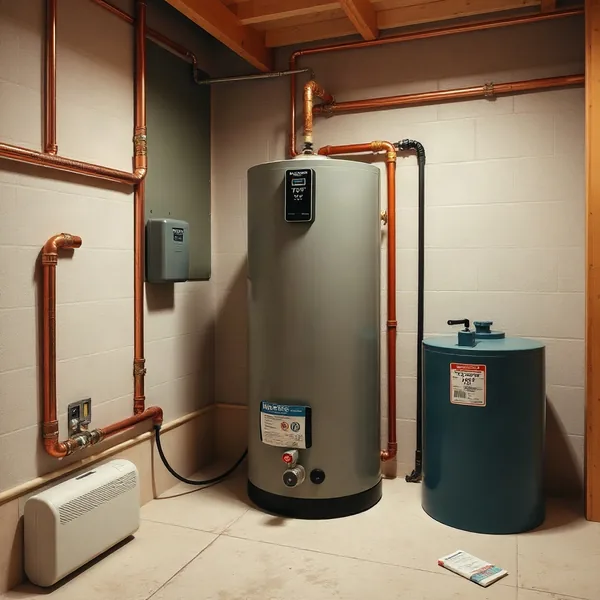
A gas hot water heater with a storage tank fails most often from internal corrosion, a degraded gas unit seal at the burner, or a failing T&P valve. An electric water heater typically leaks at the element gaskets or the pressure relief discharge. A tankless water heater leaking usually points to the heat exchanger — scale buildup from Torrance's moderately hard water can crack the exchanger over time — or to a loose inlet fitting. Boiler tank units that supply both heat and hot water add a third layer of complexity at the boiler tank connections and expansion vessel. Technicians diagnose each type differently, so identifying the style of unit before the visit saves time on the call.
05
Can a Water Heater Leak Without Any Warning?
T&P valvesudden tank failure
A water heater can leak with almost no visible warning — sometimes less than an hour passes between a perfectly dry floor and a flooded garage.
The T&P valve can fail open suddenly when pressure spikes, releasing gallons in minutes. Sudden tank failure caused by advanced internal corrosion gives no audible signal; the weakened steel simply splits along the rust line. Many Torrance homes built between the 1950s and 1970s still run tanks that are 15 or more years old, and those units are statistically overdue. The only reliable early indicator is an annual inspection that checks the anode rod, tests the T&P valve, and looks for pinhole rust at the tank seams before a catastrophic release occurs.
06
What Does It Cost to Fix a Leaking Water Heater in Torrance?
repair costreplacement costservice call
Water heater leak repair cost in Torrance depends entirely on what's actually failing.
Every replacement also requires a permit through the City of Torrance Building and Safety Division. On the replacement side, SoCalGas rebate programs can offset several hundred dollars on qualifying ENERGY STAR-certified tankless units, which meaningfully shifts the repair-versus-replace calculation. Get an on-site quote; the leak source sets the price.
07
What Should I Do If My Water Heater Floods the Garage?
drain panfloor drainwater damage cleanup
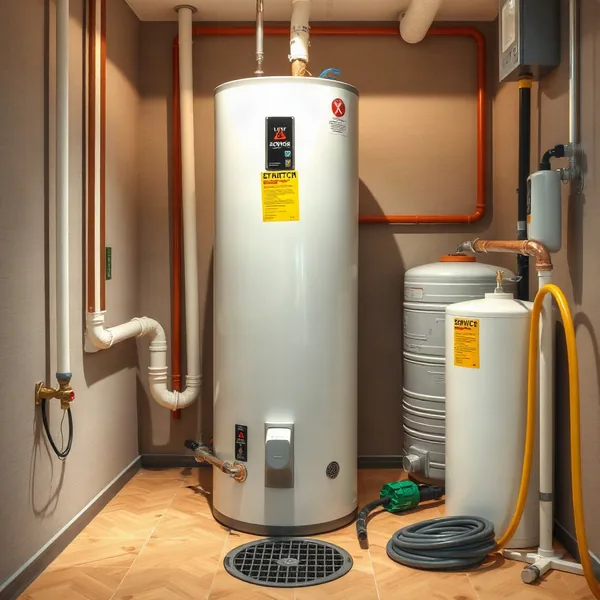
If your water heater flood is already underway, shut the cold-water inlet valve first, then cut power at the breaker or move the gas dial to Pilot.
Most Torrance garages have a floor drain — direct water toward it immediately using a squeegee or broom to reduce saturation time. Move stored items away from the perimeter and photograph the damage before cleanup begins for insurance purposes. Call a technician and a water damage cleanup service concurrently; the technician addresses the tank while the restoration crew handles structural drying. Do not restart the unit until the cause is confirmed and corrected.