info@torrancewaterheaterrepair.com (424) 414-1480 Torrance, United States
Torrance Water Heater Repair Logo (424) 414-1480
Serving Torrance
Free referral service · Licensed local pros

Expansion Tank Installation Done Right, Torrance

Licensed technicians serving Torrance homeowners with code-compliant water heater expansion tank installation and replacement

Licensed & Insured
Local Pros Near You
Local Pros

Or call directly: (424) 414-1480

Call Now

Call (424) 414-1480

Secure & Confidential

Local Pros Near You

Why Professional Water Heater Expansion Tank Installation Matters

Torrance Water Heater Repair connects local homeowners with licensed C-36 plumbers who handle every water heater service the right way, from routine fixes to full replacements.

If your system is running high pressure or your plumber flagged a closed-loop issue, a properly sized water heater expansion tank is often the first thing that needs to go in — and this page explains exactly what that involves.

Related Water Heater Accessories And Add Ons Services

Hot Water Instantly, Zero Wait

Waiting 90 seconds for hot water every morning isn't just annoying — it wastes thousands of gallons yearly. Local pros install a dedicated circulating pump that keeps water moving through your hot water loop continuously, so hot water reaches your tap in under 5 seconds. A properly set bypass valve ensures efficiency without spiking your energy bill.

  • ✓Hot water arrives before you finish reaching for the faucet
  • ✓Your water waste drops dramatically — saving real money annually
  • ✓No cold-water purging means comfortable showers every single time
  • ✓Most systems include a programmable timer for overnight energy savings
Water Heater Recirculation Pump
Hot Water Instantly, Zero Wait - Licensed
01

What Does a Water Heater Expansion Tank Do?

thermal expansionclosed-loop plumbing systempressure relief

An expansion tank gives heated water somewhere safe to go when it expands inside a closed-loop plumbing system that has no path back to the municipal main.

Water increases in volume by roughly 2% as it heats from 50°F to 120°F, and in a sealed system that pressure has to go somewhere. Without an expansion tank, it hammers against the pressure relief valve repeatedly — shortening the valve's life and stressing your pipes. The tank holds a pre-charged air bladder that compresses as water volume rises, absorbing that surge before it becomes a problem. This makes thermal expansion control a water heater necessity, not an optional accessory.

02

How Much Does Expansion Tank Installation Cost?

labor costtank sizematerial cost

If a plumber has to cut pipe and sweat a new T-fitting where none exists, add another hour of labor. Get a firm quote on-site after your system pressure is measured.

03

Is an Expansion Tank Required in Torrance Homes?

backflow preventerpressure regulatorTorrance plumbing code

In Torrance, an expansion tank is required by California plumbing code on any water heater connected to a closed system — and the majority of Torrance properties qualify as closed systems.

A home is considered closed when a backflow preventer, check valve, or pressure regulator on the meter blocks expanded water from flowing back into the city main. Most homes built after the 1980s and many older properties retrofitted under updated Torrance plumbing code have a pressure regulator at the meter. If yours does, an expansion tank isn't optional. Installing without one can void your water heater warranty and create compliance issues flagged during a resale inspection.

04

Signs Your Expansion Tank Needs Replacement

waterlogged tankrustbladder failure

The clearest sign that you need to replace a water heater expansion tank is a waterlogged tank — it feels noticeably heavy and produces a dull thud rather than a hollow sound when tapped, because bladder failure has allowed water to flood the air chamber. Rust or corrosion on the tank body or its connection threads is another hard signal. If your pressure relief valve drips repeatedly without a clear cause, that's the system shedding pressure it can't absorb — another symptom of thermal expansion tank failure. A quick air charge test on the Schrader valve with a standard gauge confirms whether pressure is present. Most residential tanks last 5 to 10 years before water heater expansion tank repair becomes irrelevant and full replacement is the only practical answer.

05

How Expansion Tanks Are Installed on Standard and Tankless Systems

cold water linetankless water heatermounting bracket

For a standard tank-style water heater, water heater thermal expansion tank installation means mounting the tank on the cold water line within 18 inches of the cold inlet, using a T-fitting tapped into the existing pipe run.

The tank mounts vertically or horizontally per the manufacturer's spec, and a mounting bracket prevents the fitting from bearing the weight long-term. Installing a thermal expansion tank on a tankless water heater follows the same cold-water-line logic, but tankless water heater expansion tank location matters more because flow sensors and modulating valves are sensitive to pressure spikes. A licensed plumber will also verify that California's seismic strapping requirements are met for the water heater itself before finishing the job — that's non-negotiable under state law.

06

Common Expansion Tank Noises and Pressure Issues

water hammerPSI gaugeair charge

Water heater expansion tank noise almost always points to one of two root causes: a dead air charge or a failed bladder.

When the air charge drops to zero, the tank offers no cushioning, and every heating cycle sends a pressure wave through the pipes — producing the classic water hammer bang. You'll hear it most when the burner kicks on after a period of standby. A PSI gauge on the Schrader valve will read zero on a tank that's lost its air charge; a healthy residential tank should read between 40 and 80 PSI, matching your incoming supply pressure. If the gauge reads correctly but the tank still feels heavy and sounds dull, the bladder has separated internally and the tank needs replacement, not recharging.

07

Choosing the Right Tank: Tee Fittings and Sizing

expansion tank teegallon capacitytank strap

Sizing the expansion tank correctly starts with two numbers: your system's supply pressure and your water heater's gallon capacity.

A 2-gallon expansion tank handles most 40- to 50-gallon residential heaters operating under 80 PSI — the setup found in the majority of Torrance homes built between the 1950s and 1970s. Larger or higher-pressure systems step up to 4.4-gallon or even larger units. The expansion tank tee connects into the cold water line using a standard T-fitting, and the orientation must match the manufacturer's spec to keep the bladder functioning correctly over time. A tank strap or pipe support secures the assembly and prevents vibration stress on the tee joint — particularly important given the seismic activity common to the greater Los Angeles area.

08

Cost to Install vs. Cost to Replace an Expansion Tank

replacement labornew install costparts pricing

If an aging water heater is also being swapped out at the same time, the plumber can bundle both jobs and reduce total labor hours. Homeowners replacing a standard tank with an ENERGY STAR-certified unit may also qualify for a SoCalGas rebate, which can partially offset the combined expansion tank cost installation and heater replacement cost.

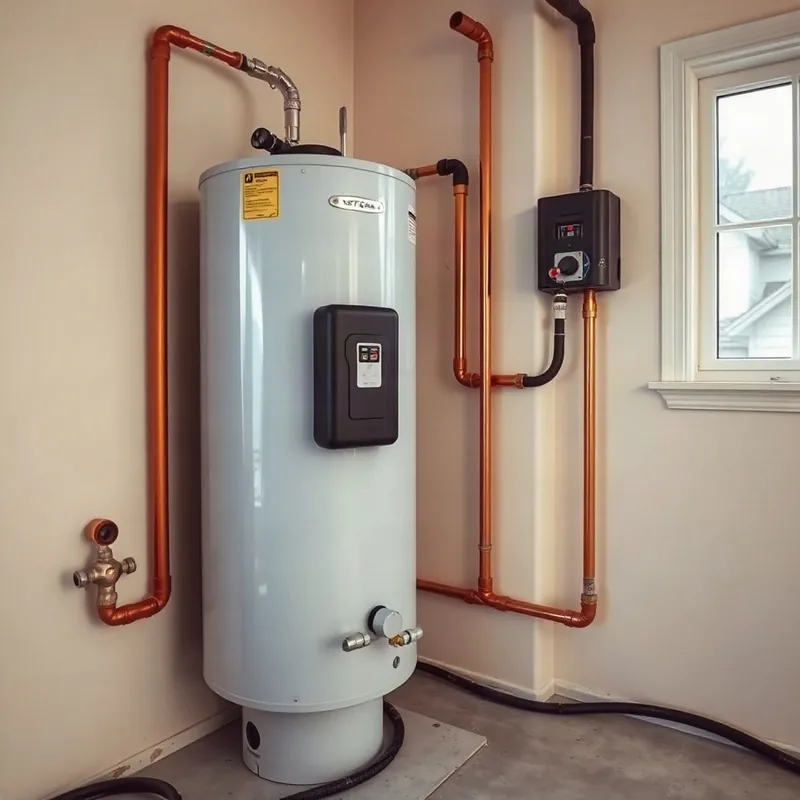
Why Choose Us for Water Heater Expansion Tank Installation?

Trusted water heater repair professionals serving Torrance

Transparent Install Cost

Code-Verified

Code Requirement Clarity

Most Torrance homes with a pressure regulator at the meter legally require an expansion tank under California plumbing code.

Seismic-Compliant

Proper Mount Process

Every expansion tank is mounted on the cold water line within 18 inches of the heater's inlet, secured with a bracket, and oriented per the manufacturer's spec. California seismic strapping for the water heater itself is included on every job — it's a legal requirement, not an upsell.

Annual 5-Min Check

Pressure Check Maintenance

After installation, the technician sets the tank's pre-charge to match your home's incoming water pressure — typically 40 to 80 PSI. Local pros recommend a pressure check every 12 months; a 5-minute Schrader valve test is all it takes to confirm the air charge is still intact.

Areas We Serve in Torrance

We connect homeowners in these ZIP codes with licensed local water heater repairs.

Torrance (90501, 90502, 90503, 90504, 90505, 90506, 90507, 90508, 90509, 90510)

Call to be connected with a licensed local pro in these ZIP codes.

How Water Heater Expansion Tank Installation Works

Simple steps to get your water heater expansion tank installation done in Torrance

1

Book Your Water Heater Expansion Tank Installation

We respond within minutes.

2

Free Water Heater Expansion Tank Installation Survey

3

Upfront Fixed Price

One fixed price for your water heater expansion tank installation — no hidden charges, ever.

4

Water Heater Expansion Tank Installation

Frequently Asked Questions

How much does it cost to install a water heater expansion tank in Torrance?

▼

Tankless systems sometimes require additional fittings, pushing costs toward the higher end. A licensed C-36 plumber will confirm exact pricing on-site after assessing your system pressure and pipe configuration. If you are simultaneously replacing an aging tank water heater, check whether you qualify for a SoCalGas rebate on a high-efficiency replacement unit, which can offset overall project costs.

Is a thermal expansion tank required by code in Torrance, California?

▼

Yes, in most Torrance homes a thermal expansion tank is required under California plumbing code whenever the water supply system is a closed system — meaning it has a backflow preventer, check valve, or pressure-reducing valve (PRV) that prevents expanded hot water from pushing back into the municipal main. The majority of Torrance properties built after the 1980s, and many older homes retrofitted under updated code, have a PRV on the meter, making an expansion tank legally necessary. To confirm the requirement for your specific address, contact the City of Torrance Building and Safety Division directly. Installing without a required expansion tank can void your water heater warranty and create compliance issues during home sale inspections.

Where should the expansion tank be installed on my water heater?

▼

The expansion tank should be installed on the cold water supply line leading into the water heater, typically within 18 inches of the heater's cold inlet port. Standard practice is to mount it on a horizontal or vertical run of pipe using a T-fitting, with the tank oriented either vertically (upright or inverted) or horizontally — as long as the manufacturer's orientation guidelines are followed. A support bracket or pipe strap is required to prevent stress on the T-fitting from the tank's weight, especially since California Health and Safety Code already mandates seismic strapping of the water heater itself. Proper placement ensures the air bladder inside the tank can freely absorb thermal expansion without creating pressure spikes at the water heater's temperature and pressure (T&P) relief valve.

How do I know if my water heater expansion tank is bad?

▼

Common signs of a failing water heater expansion tank include: (1) a waterlogged tank that feels heavy and produces a dull thud rather than a hollow sound when tapped, indicating the bladder has ruptured and water has filled the air chamber; (2) the T&P relief valve dripping or discharging repeatedly, a sign the system has no air cushion to absorb pressure; (3) visible rust, corrosion, or moisture around the tank body or connections; (4) pressure fluctuations noticed at faucets throughout the home. If you search for water heater expansion tank near me and call a licensed plumber, a quick pressure test on the tank's Schrader valve will confirm whether the air charge is present. A standard residential expansion tank should hold a pre-charge of 40 to 80 psi matching your incoming water pressure. A failed tank typically needs full replacement rather than repair.

Why is my water heater expansion tank making noise?

▼

Noise from a water heater expansion tank — typically banging, gurgling, or a hammering sound — usually signals one of two problems: a failed internal bladder or a complete loss of air charge. When the bladder ruptures, water fills the entire tank and the system loses its cushioning ability, causing pressure waves (water hammer) to travel through the pipes every time hot water demand cycles on and off. A depleted air charge produces a similar effect. In some cases, a loose mounting bracket allows the tank to vibrate against adjacent pipes or framing, generating rattling. A licensed plumber can test the Schrader valve air charge with a standard tire gauge; if air pressure is zero and the tank feels heavy, the bladder has failed and the tank requires replacement. Attempting to recharge a bladder-failed tank will not restore function.

Have more questions? Call us anytime!

Speak to a local water heater(424) 414-1480Call Now