01
What Happens During a Tankless Water Heater Descaling?
heat exchangerdescaling solutioncirculation pump
Descaling a tankless water heater means pumping a water heater descaler solution through the heat exchanger to dissolve mineral deposits that restrict flow and reduce efficiency.
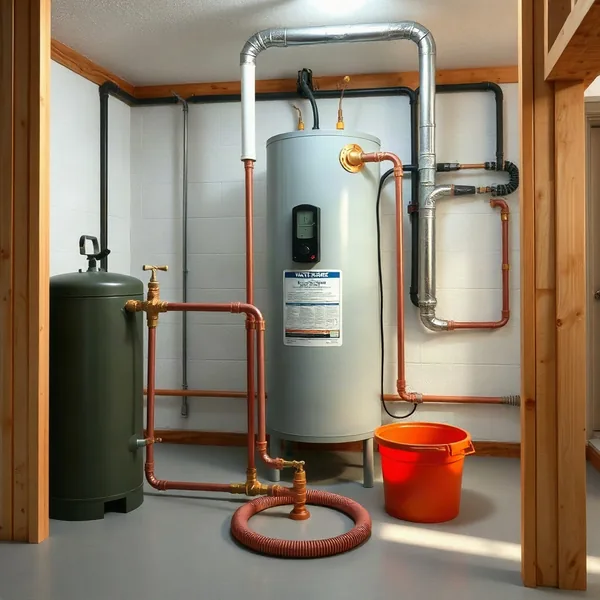
The technician starts by isolating the unit, then attaches a circulation pump to the cold-water service port and routes the return line back to the solution bucket. The descaling solution — whether vinegar-based, citric acid, or a commercial formula — circulates for 45 to 90 minutes. That contact time gives the acid enough dwell to break down calcium carbonate layers coating the heat exchanger walls. A 10-to-15-minute fresh-water flush follows to clear dissolved scale and residual solution before the unit goes back online. Total service time runs 1 to 2 hours for most residential tankless units.
02
Which Descaling Pump or Kit Fits Your Tankless Unit?
Superior Pump 91660ScaleRxdescaler pump kit
The right descaler pump kit depends on your unit's service port size and brand requirements.
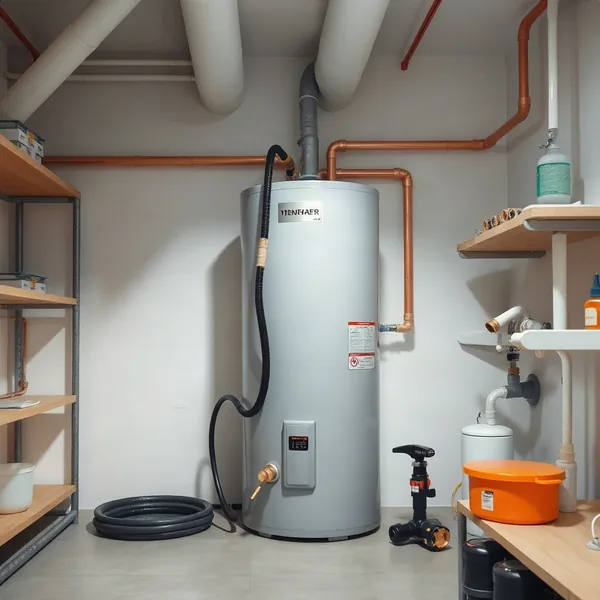
The Superior Pump 91660 is a widely compatible submersible pump that fits most Navien, Rinnai, and Noritz service ports using standard 3/4-inch hose connections, making it a reliable pick for the majority of Torrance installs. ScaleRx offers a complete hot water heater descaling kit — pump, hoses, and solution — pre-sized for Rheem and A.O. Smith tankless units. Haymaker 32 oz tankless water heater descaler kits pair directly with their pump for a closed system that requires no separate solution measuring. For older Bosch units with proprietary port fittings, a tankless water heater descaler pump kit that includes adapter couplings is necessary. Always confirm your unit's flow-rate spec before selecting a pump to avoid under-circulating the solution.
03
Descaling Solutions Compared: Vinegar, Citric Acid, and Haymaker
Hercules Haymakercitric acidvinegar solution
The best descaling solution for a tankless water heater depends on how much scale has built up.
Citric acid mixed to a 3–5% concentration dissolves calcium faster per hour of contact and rinses away without lingering odor, making it a better choice for annual maintenance. Hercules Haymaker, a commercial tankless descaler from the Hercules chemical line, contains a stronger organic acid blend that tackles heavy scale neglected for 18 months or more in a single 45-to-90-minute pass. For Torrance's harder water, citric acid or Hercules Haymaker descaler typically outperform vinegar alone.
04
How Often Should You Descale in Torrance's Hard Water?
hard watercalcium scalemanufacturer interval
Most manufacturers set a descale interval of 12 months, but hard water conditions in Torrance justify shortening that to every 6 to 9 months.
The city's water supply blends Metropolitan Water District imports from the Colorado River with local groundwater, both carrying elevated calcium and magnesium hardness. That mineral load deposits calcium scale inside the heat exchanger faster than the manufacturer interval assumes. Waiting the full 12 months in Torrance often means scale accumulates to the point where a standard flush is no longer enough and a stronger commercial treatment — or heat exchanger inspection — becomes necessary. Setting a calendar reminder every 6 months keeps buildup manageable, protects warranty compliance, and avoids the repair costs that come with chronic neglect. This is especially relevant in Torrance homes built in the 1950s–1970s, where older plumbing can compound mineral concentration at fixtures.
05
DIY Descaling vs. Hiring a Professional: What's the Difference?
warranty compliancescale buildup risk
The practical limit of DIY is light-to-moderate scale buildup caught within the 6-to-9-month window. Beyond that, scale buildup risk increases sharply: heavy deposits may require a commercial-strength acid, a longer circulation time, or physical inspection of heat exchanger ports that DIY equipment can't evaluate. Manufacturers also require documented professional service for certain warranty claims, so skipping a licensed tech can void coverage on units still under a parts warranty. A professional technician can spot early corrosion, confirm error codes are scale-related rather than component failures, and ensure the unit meets California's Title 24 efficiency requirements if a replacement conversation arises. For Torrance homeowners past the 12-month mark without a flush, a professional service is the lower-risk call.