info@torrancewaterheaterrepair.com (424) 414-1480 Torrance, United States
Torrance Water Heater Repair Logo (424) 414-1480
Serving Torrance
Free referral service · Licensed local pros

Fix Rusty Hot Water in Torrance

Anode Rod Replacement & Tank Corrosion Diagnosis for Torrance Homeowners

Licensed & Insured
Local Pros Near You
Local Pros

Or call directly: (424) 414-1480

Free referral service · Licensed local pros

Licensed & Insured
Local Pros
(424) 414-1480
Local Pros Near You

Why Professional Rusty Hot Water Matters

Torrance Water Heater Repair connects local homeowners with licensed technicians who diagnose and fix water heater problems fast.

If rusty hot water is coming from your tap, the cause is almost always inside the heater itself — and catching it early can save the cost of a full tank replacement.

Related Water Heater Problems And Symptoms Services

Professional Smelly Hot Water in Torrance carried out by a licensed technician

Smelly Hot Water

Rotten-egg odors in your hot water eliminated fast with anode rod treatment or tank flush.
Smelly Hot Water
Professional Water Heater Leaking From Bottom in Torrance carried out by a licensed technician

Water Heater Leaking From Bottom

A bottom leak often means tank failure — local pros diagnose and stop the damage before it floods your floor.
Water Heater Leaking From
Professional Water Heater Not Heating in Torrance carried out by a licensed technician

Water Heater Not Heating

No hot water by morning?
Water Heater Not Heating

More Related Water Heater Problems And Symptoms Services

Cold Showers Ruining Your Morning?

Waking up to no hot water in Torrance means something went wrong overnight — a tripped breaker, a failed pilot light, or a faulty thermostat cutting your heater off entirely. If you're also seeing puddles, check our Water Heater Leaking page or our Water Heater Not Heating guide.

  • ✓ available 7 days a week in Torrance
  • ✓Local pros identify breaker, thermostat, and pilot light faults fast
No Hot Water
Cold Showers Ruining Your Morning? - Licensed

Stop That Leak Before It Floods

A puddle forming beneath your tank isn't just inconvenient — a leaking water heater can cause hundreds of dollars in Torrance water damage within hours. Local pros trace every leak to its exact source: a failing t&p relief valve, advanced tank corrosion eating through the lining, or a loose shutoff valve connection. If the leak is at the base, check our detailed guide on Water Heater Leaking From Bottom. Persistent leaks often trigger related issues covered under No Hot Water repairs.

  • ✓We shut off the water immediately to protect your home. Every leak source — valve, fitting, or corroded tank — gets documented
  • ✓You'll never pay a surprise invoice after the job
Water Heater Leaking
Stop That Leak Before It Floods - Licensed

Pilot Light Won't Stay Lit?

A pilot light that keeps going out usually means a failing thermocouple or worn pilot assembly — not just bad luck. When the thermocouple can't sense the flame, it shuts off gas flow as a safety measure, leaving you with cold showers. Our Torrance technicians diagnose the exact failure point — thermocouple, pilot assembly, or gas control valve — and most repairs are completed . If you're also experiencing Water Heater Not Heating issues, a faulty gas control valve is often the shared culprit.

  • ✓Local pros carry replacement thermocouples and pilot assemblies on every service van
  • ✓No repeat visits, no guesswork — just restored hot water fast
  • ✓Persistent pilot failures can escalate into No Hot Water emergencies if ignored
  • ✓ — call us before it does
Water Heater Pilot Light
Pilot Light Won't Stay Lit? - Licensed

Top Leaks? Act Fast Now

A puddle forming around your water heater's top fittings signals one of three culprits — a failing T&P valve, a corroded inlet/outlet nipple, or a blocked overflow pipe. Ignore it and you risk ceiling damage, mold, or a full tank failure within days.. If left unchecked, a weeping T&P valve can also mask a Water Heater Not Heating issue or escalate into a full Water Heater Leaking emergency.

  • ✓Local pros carry T&P valves and nipple fittings on every service van
  • ✓ are available across Torrance, seven days a week
  • ✓Persistent pressure problems may also cause No Hot Water — local pros fix both in one visit
Water Heater Leaking From
Top Leaks? Act Fast Now - Licensed

Explore Additional Services

Professional Not Enough Hot Water in Torrance carried out by a licensed technician

Not Enough Hot Water

Not Enough Hot Water
Professional Water Heater Popping Noise in Torrance carried out by a licensed technician

Water Heater Popping Noise

That banging sound means dangerous sediment buildup; we flush and restore quiet operation fast.
Water Heater Popping Noise
Professional Hot Water Runs Out Fast in Torrance carried out by a licensed technician

Hot Water Runs Out Fast

If your hot water lasts under 10 minutes, the pro will pinpoint the failing element or tank issue.
Hot Water Runs Out
01

Why Is My Hot Water Rusty or Discolored?

anode rod corrosiontank rust

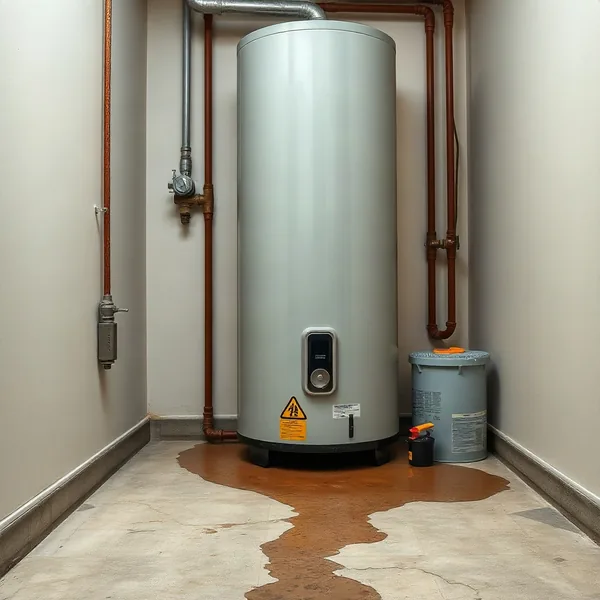
Rusty hot water almost always traces back to one of two causes: a depleted anode rod or advancing tank corrosion inside the heater itself.

The anode rod is a sacrificial metal rod installed in your tank to attract corrosive minerals before they reach the steel walls. Once it's consumed — often within 3–5 years in hard-water areas — tank rust begins. You'll first notice orange or brown tinting when you run hot water. Torrance's municipal water contains enough dissolved minerals to chew through an anode rod faster than manufacturers' ratings assume, meaning a tank that's only 7 or 8 years old can already show signs of internal rust if the rod has never been changed.

02

Is Rusty Water Harmful to Drink or Bathe In?

water safetyiron sediment

Rusty water isn't acutely toxic — iron oxide at household concentrations isn't classified as a health hazard — but it is a reliable warning that something inside your water heater is failing.

Iron sediment carried in that discolored water gradually clogs fixture aerators, strains appliance valves, and stains laundry and tubs. More importantly, a deteriorating tank interior creates conditions where bacteria can multiply more easily. Water safety concerns compound when the rust is heavy or persistent rather than occasional. If discoloration appears only from the hot tap and has been present for more than a few days, schedule an inspection within the week — not an emergency, but not something to leave for next month.

03

Can an Anode Rod Fix Rusty Water?

magnesium anodealuminum anode

Replacing the anode rod can absolutely stop rusty water — but only if the tank lining itself is still intact.

A fresh magnesium anode or aluminum anode restores the sacrificial protection that keeps steel walls from oxidizing, and many homeowners see clear water return within a day or two of replacement. Magnesium anodes work better in soft water; aluminum anodes handle the mineral load in harder water like Torrance's supply more effectively and last slightly longer. If your heater is under 8–10 years old and the tank shows no pinhole leaks or significant pitting, swapping the anode rod is often the right first move. Beyond that age threshold, a technician's inspection will tell you whether the rod alone is still the best fix for smelly or discolored water.

04

Is Rusty Water From the Water Heater or the Pipes?

galvanized pipehot vs cold test

The fastest way to tell is a simple hot-versus-cold test: run cold water from a tap for two minutes, then switch to hot only.

Clear cold water paired with rusty hot water points directly to the water heater. If both temperatures run discolored, the problem is upstream — likely a galvanized pipe section corroding from the inside. Torrance has a significant share of homes built between the 1950s and 1970s, and galvanized pipe was the residential standard through much of that era. Those pipes rust internally over decades, shedding flakes that tint both hot and cold water. Rust that appears only in hot water and clears after 60–90 seconds usually means sediment has settled at the tank bottom and is disturbing when flow starts.

05

How Much Does It Cost to Replace an Anode Rod or Tank in Torrance?

anode replacement costtank replacement cost

If you're replacing a tank, it's worth asking about SoCalGas rebate programs on qualifying high-efficiency or tankless units — those rebates can reduce net cost by several hundred dollars depending on the model chosen.
Areas We Serve in Torrance

We connect homeowners in these ZIP codes with licensed local water heater repairs.

Torrance (90501, 90502, 90503, 90504, 90505, 90506, 90507, 90508, 90509, 90510)

Call to be connected with a licensed local pro in these ZIP codes.

Why Choose Us for Rusty Hot Water?

Trusted water heater repair professionals serving Torrance

1-Visit Diagnosis

Root Cause Diagnosed

Rusty water has two distinct sources — a depleted anode rod or active tank corrosion — and treating the wrong one wastes money. Every technician we dispatch runs a hot-versus-cold tap test and inspects the anode condition before recommending any repair. You get an accurate diagnosis in a single visit.

100% Permitted

Permitted Work Only

Every water heater replacement we coordinate includes a permit pulled through the City of Torrance Building and Safety Division, performed by a licensed C-36 Plumbing contractor. Unpermitted work can void homeowner's insurance and complicate future home sales — we don't cut that corner.

Anode Rod Cost Transparency

If a full tank replacement turns out to be the smarter call, you'll hear that before any work starts, along with current SoCalGas rebate options that may apply.

2–3 Yr Rod Cycles

Hard-Water Experience

Torrance's water hardness depletes anode rods up to 40% faster than manufacturer timelines assume.

Code-Compliant Install

Seismic Strapping Standard

California Health and Safety Code Section 19211 requires earthquake strapping on every water heater in seismically active Torrance. Every replacement coordinated through this service includes proper seismic strapping as a standard line item — not an upsell — so the installation passes inspection the first time.

How Rusty Hot Water Works

Simple steps to get your rusty hot water done in Torrance

1

Book Your Rusty Hot Water

We respond within minutes.

2

Free Rusty Hot Water Survey

3

Upfront Fixed Price

One fixed price for your rusty hot water — no hidden charges, ever.

4

Rusty Hot Water

Frequently Asked Questions

Why is my hot water rusty?

▼

The most common reason why is my hot water rusty comes down to two causes: a depleted anode rod or an aging, corroding tank. The anode rod is a sacrificial metal rod (typically magnesium or aluminum) inside your tank that attracts corrosive minerals so the steel tank walls don't rust. Once it's fully consumed, the tank itself begins to corrode, turning your hot water orange or brown. In Torrance, hard municipal water accelerates anode rod depletion faster than the national average, meaning the rod may need inspection or replacement every 2–3 years rather than the typical 4–5. Water heater tanks over 10–12 years old are especially prone to internal rust. If you're seeing rusty water coming from your hot water tap, the heater's interior lining is likely compromised.

Is rusty water harmful?

▼

Rusty water is generally not acutely toxic — the iron oxide that causes discoloration is not classified as a health hazard at typical household concentrations. However, it is a clear warning signal that your water heater tank is actively corroding internally. Bacteria can proliferate more easily in a deteriorating tank, and sediment from rust can damage faucets, appliances, and fixtures over time. If the rust is caused by a failing anode rod, the window for a cost-effective repair is closing. If the tank lining has already breached, replacement is usually the only safe option. Either way, rusty water coming from your hot water tap warrants a professional inspection promptly — not as an emergency, but within a few days to a week.

Can I replace the anode rod myself to fix rusty water?

▼

Yes, anode rod replacement is a DIY-possible task, but several factors determine whether a professional should handle it instead. The process involves shutting off the water supply and gas or power, draining several gallons from the tank, and using a 1 1/16-inch socket wrench to remove the hex-head rod — which is often corroded in place and requires significant torque. If the rod hasn't been changed in many years, it can be seized so tightly that forcing it risks cracking the tank fitting. If your water heater is already 10+ years old, a professional visit is worthwhile because the technician can assess whether replacement is more cost-effective than repair. Note that any permitted repair work in Torrance must be performed or supervised by a licensed C-36 Plumbing contractor under City of Torrance Building and Safety Division requirements.

How do I know if rust is coming from my pipes or water heater?

▼

The simplest diagnostic test is to run cold water only from a tap for 2–3 minutes, then run hot water only from the same tap. If the cold water runs clear but the hot water is discolored, the source is almost certainly your water heater, not your supply pipes. If both cold and hot water are rusty, the problem is upstream — either your municipal supply or, more commonly in older Torrance homes, galvanized steel pipes that are corroding from the inside. A substantial portion of Torrance's housing stock was built between the 1950s and 1970s, and homes of that era frequently still have original or early-replacement galvanized piping. If the rust appears only when running hot water and clears after a minute or two, sediment in the tank bottom is the likely culprit. Persistent rust in hot water only points to active internal tank corrosion or a failed anode rod — both reasons to schedule an inspection.

Does Torrance tap water cause more rust in water heaters?

▼

Yes, local water conditions in Torrance do accelerate rust formation inside tank water heaters. Torrance receives water that ranks as moderately hard to hard, with elevated levels of dissolved minerals including calcium, magnesium, and chlorides. Water hardness is directly corrosive to the sacrificial anode rod inside the tank, depleting it faster than the manufacturer's rated service life assumes. Once the anode rod is consumed, the steel tank walls become exposed and begin corroding — producing the rust-colored water homeowners notice at the tap. Additionally, many Torrance homes built in the 1950s–1970s still contain sections of older galvanized piping, which can compound the problem by adding rust from the distribution system itself. Homeowners dealing with recurring rusty water should plan for anode rod inspections every 2–3 years rather than the standard 4–5, and should factor accelerated tank wear into any repair-versus-replace decision. When replacement becomes necessary, SoCalGas offers rebate programs on qualifying high-efficiency and tankless units that can meaningfully offset the upgrade cost.

Have more questions? Call us anytime!

Speak to a local water heater(424) 414-1480Call Now