01
Why Is Water Leaking From the Bottom of My Water Heater?
tank seamdrain valveinternal corrosion
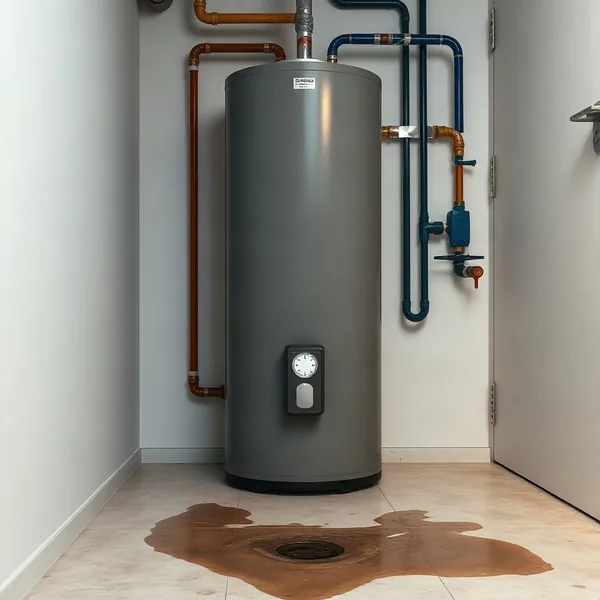
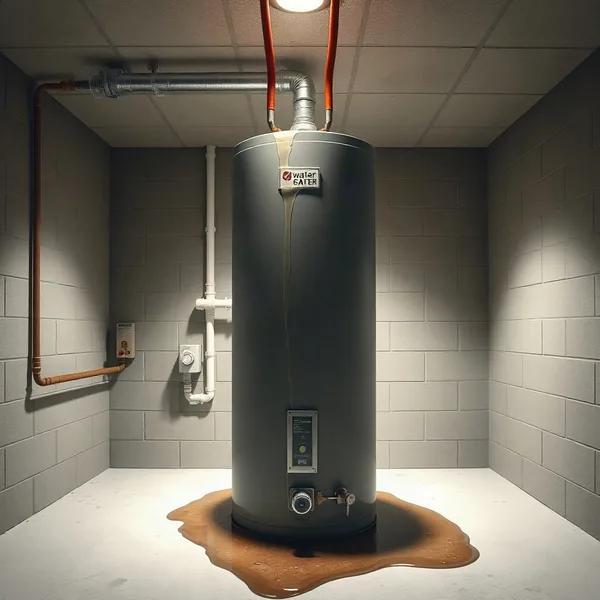
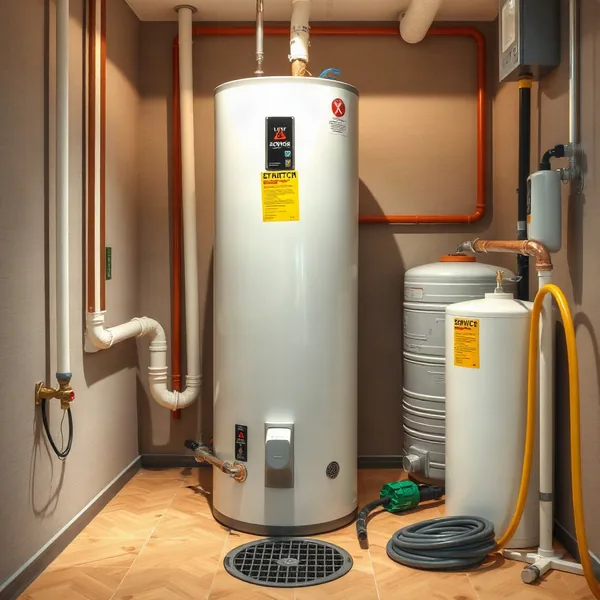
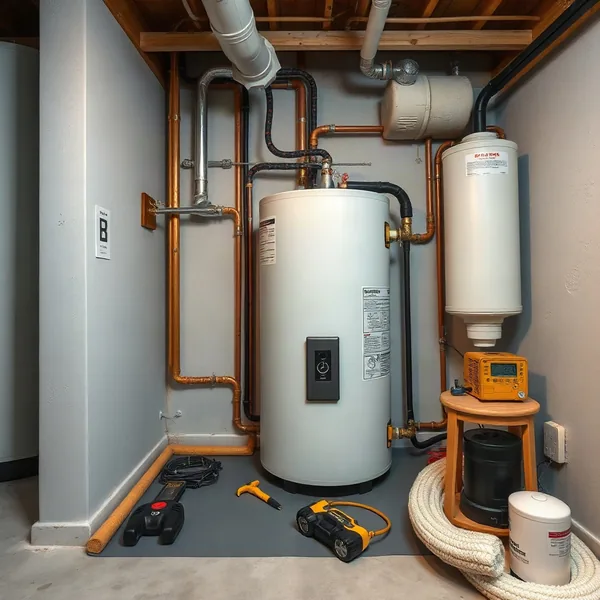
A water heater leaking from the bottom almost always traces back to one of two sources: a failing drain valve or internal corrosion that has breached the tank seam.
Internal corrosion is the more serious scenario. Torrance's municipal water supply is moderately hard, which depletes the anode rod faster than the manufacturer assumes, leaving the steel interior exposed. Once rust works through to the tank bottom seam, water will seep out and no patch holds reliably.
02
Is a Dripping Bottom a Sign the Tank Is Failing?
glass liningrust perforation
A water heater dripping from the bottom is not automatically a death sentence for the unit, but it does demand immediate attention.
If the drip disappears within 20–30 minutes after startup, condensation is the likely culprit — moisture forms on the cool exterior during the first heating cycle and evaporates once the outer shell warms up. Persistent dripping that continues after an hour of normal operation points to something structural. Glass lining corrosion is the mechanism to understand: the factory-applied glass coating inside every steel tank eventually develops micro-cracks, exposing bare steel to hot water. Rust perforation follows, typically along the tank bottom seam where stress concentrates. At that stage the unit is end-of-life, and no sealant or internal patch restores it to safe, leak-free operation.
03
Gas or Tankless Units: Does Bottom Leaking Mean Replacement?
gas tank bodytankless drain line
For a gas water heater leaking from the bottom, the answer depends entirely on whether the gas tank body itself is compromised or whether an external fitting has failed.
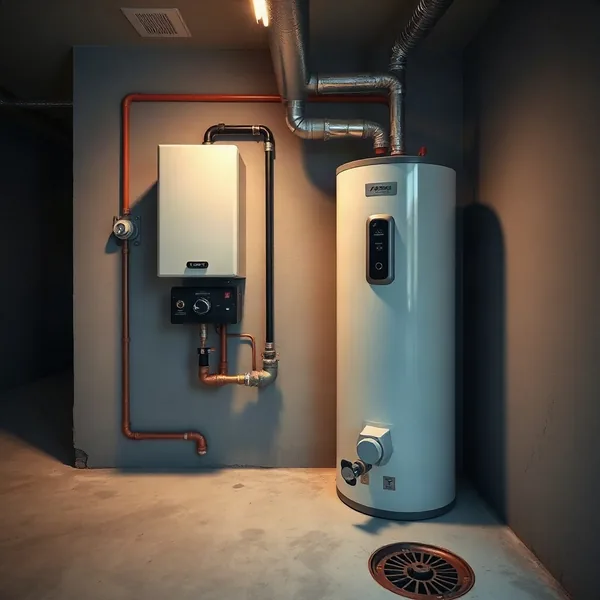
If corrosion has perforated the steel shell, replacement is the only responsible path; a corroded gas tank body cannot be welded safely under domestic water pressure. If the leak originates from a drain valve, temperature-pressure relief line, or inlet connection, a licensed technician can address those components without retiring the whole unit. A tankless water heater leaking from the bottom presents a different picture: tankless units have no storage tank to corrode, so a bottom drip usually points to a condensate drain line blockage, a loose fitting, or a heat exchanger issue. Tankless repairs are often component-level, but they still require a licensed C-36 contractor for any gas-line work in Torrance.
04
Tank Corrosion and When Bottom Leaks Mean It's Time to Replace
corroded tankend-of-life signs
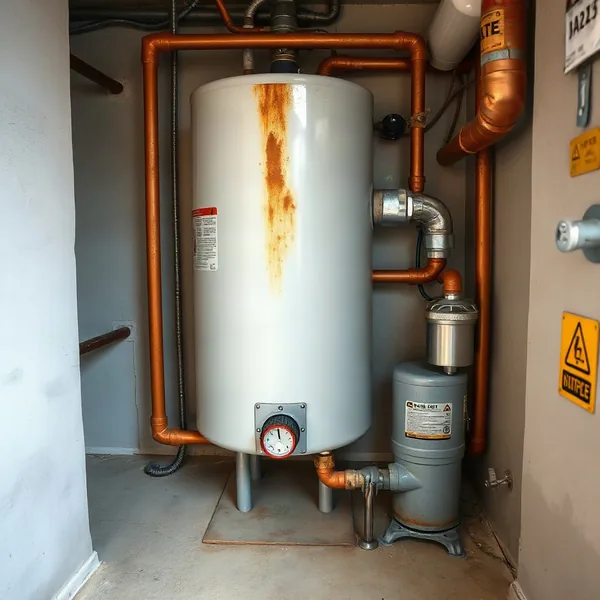
A water heater tank leaking from the bottom due to a corroded tank is the clearest end-of-life signal a unit sends.
End-of-life signs include rusty water at hot taps, a unit more than 10–12 years old, and visible orange staining around the tank base. In Torrance, where a large share of housing stock dates from the 1950s to 1970s, many homes still run the same 50-gallon configurations installed decades ago. Hard local water accelerates anode rod depletion — the rod that sacrifices itself to protect the steel interior — meaning water heating leaking from the bottom can appear years before the unit's rated service life ends. When a technician confirms the tank wall is breached, replacement is the correct call; continuing to operate a corroded tank risks a sudden high-volume failure and structural water damage.
05
How Much Does It Cost to Fix or Replace a Bottom-Leaking Water Heater?
replacement costlabor cost
A permit through the City of Torrance Building and Safety Division is required for every replacement and must be pulled by a licensed C-36 Plumbing contractor. California's Title 24 standards further limit which models can legally be installed, so unit sourcing can affect the timeline by 1–3 days.
06
Can I Repair a Bottom Leak Myself Safely?
drain valve tighteningshutoff procedure
Drain valve tightening is the one task a careful homeowner can attempt before calling a technician.
Start with the shutoff procedure: close the cold-water inlet valve at the top of the unit, switch a gas heater to pilot mode or turn off the breaker for an electric unit, then try snugging the drain valve a quarter turn clockwise with a flat wrench. If the drip stops within a few minutes, you may have caught it early. If it continues, or if you see rust-colored water pooling at the tank base, stop. Opening a corroded tank's drain valve can cause the valve body to fail completely, releasing the full tank contents — up to 50 gallons — onto the floor. At that point you need a licensed technician to assess whether a valve replacement or full unit swap is required, and in Torrance that work must be permitted through the Building and Safety Division.